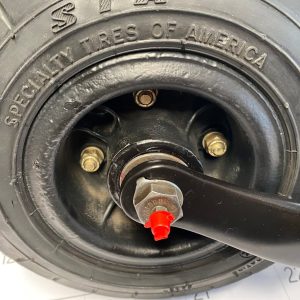
The Scott 3200A Tailwheel – Fully Rebuilt offers a dependable replacement option for suitable taildraggers requiring responsive steering, smooth swiveling, and reliable aircraft ground handling. The meaning of fully rebuilt should be supported by information describing disassembly, cleaning, inspection, measurement, lubrication, component replacement, reassembly, adjustment, and functional testing.
A Scott 3200A Tailwheel Assembly can contribute to controlled taxiing, parking, takeoff alignment, landing rollout, and maneuvering in confined ramp areas. The actual condition of a Scott Tailwheel Assembly should be determined through appropriate inspection rather than cosmetic appearance alone.
The Aircraft Tailwheel Assembly carries tail loads while allowing the aircraft to taxi, turn, park, take off, and land on suitable surfaces. A properly maintained General Aviation Tailwheel can support predictable directional control and long-term serviceability.
Whether the project involves a Tailwheel Steering Assembly, Aircraft Ground Handling Tailwheel, or Scott 3200 Series Tailwheel, professional installation remains important.
Understanding the Scott 3200A Tailwheel
The assembly can respond to normal steering input while allowing broader movement when its internal mechanism releases appropriately. The tailwheel operates together with the aircraft tail spring, steering chains or links, steering springs, rudder system, attachment bolts, and surrounding structure.
Choosing a Scott 3200A Tailwheel Assembly
Actual operation depends on the complete aircraft installation rather than the tailwheel assembly alone. The exact work completed should be listed clearly because rebuilt assemblies may differ in scope and component replacement.
Professional Scott Tailwheel Rebuilding
Worn components should be replaced while retained items should meet suitable inspection criteria. Cosmetic refinishing should remain secondary to mechanical condition and structural integrity.
Aircraft Tailwheel Assembly Maintenance
The assembly should move freely enough for intended operation while avoiding uncontrolled swivel or excessive looseness. Incorrect linkage tension can cause delayed steering, harsh engagement, restricted movement, or unnecessary component loading.
Choosing a General Aviation Tailwheel
Each operating environment places different demands on the tire, wheel, fork, bearings, steering mechanism, hardware, and lubrication. Experimental aircraft installations should be evaluated according to the builder’s configuration and applicable operational requirements.
Aircraft Tailwheel Steering Performance
The tailwheel contributes to directional control as the aircraft transitions between stationary, taxi, acceleration, deceleration, and landing rollout. Abnormal wear may indicate misalignment, bearing problems, repeated shimmy, poor adjustment, or use on abrasive surfaces.
Benefits of a Taildragger Tailwheel
The Taildragger Tailwheel should be treated as an important ground-control component rather than a minor accessory. Pilots should avoid unnecessary mechanical stress while using operating techniques appropriate to the aircraft and surface.
Aviation Tailwheel System Components
A worn tail spring or loose mounting bolt may cause poor tracking even when the rebuilt tailwheel remains mechanically serviceable. Springs should remain free from distortion, corrosion, cracking, broken coils, or unsuitable substitution.
Benefits of a Tailwheel Steering Assembly
The mechanism should respond smoothly without sticking, harsh engagement, excessive delay, uncontrolled release, or irregular centering. The full steering and swivel range should be checked after installation.
Aircraft Taxi Steering Performance
Its mechanical condition influences how easily the aircraft can turn and track on the ground. Towbars and handling equipment should match the aircraft and remain clear of vulnerable tailwheel components.
Benefits of the Scott 3200 Series Tailwheel
The Scott 3200 Series Tailwheel has become familiar within general aviation through its use on numerous conventional-gear aircraft and restoration projects. Model identification should be supported through reliable references and qualified review.
Choosing a Heavy-Duty Aircraft Tailwheel
Rugged operations may involve gravel, grass, dirt, uneven surfaces, frequent cycles, contamination, and repeated loading. Mud, dust, gravel, and water can shorten inspection and lubrication intervals.
Tailwheel Aircraft Parts
Visually similar hardware can differ in Tailwheel Steering Assembly dimensions, material, strength, finish, or mechanical fit. A weak spring, worn bushing, rough bearing, damaged pawl, or incorrect fastener may create movement throughout the mechanism.
Benefits of an Aircraft Steering Tailwheel
A rebuilt steering mechanism should be evaluated for smooth, consistent, and repeatable operation. A complete review supports reliable Aircraft Steering Tailwheel performance.
Installing a Replacement Aircraft Tailwheel
The rebuilt Scott 3200A should be compared with both the existing installation and the intended aircraft configuration. The unit should not be installed solely because it appears clean or freshly refinished.
Maintaining General Aviation Gear Components
Each component contributes to aircraft support, ground control, steering, braking, or load absorption. Known limitations and damage should remain clearly disclosed.
Evaluating a Scott 3200A Tailwheel
A detailed inspection reduces uncertainty and supports a more informed transaction.
- Determine whether the sale includes the tire, wheel, axle, bearings, steering springs, chains, mounting bolts, fittings, and rebuild records.
- Inspect the assembly for cracks, corrosion, bending, damaged threads, enlarged holes, fork distortion, tire wear, rough rotation, and excessive looseness.
- Report missing parts, shipping damage, rough operation, identification discrepancies, or incomplete documentation according to the agreed terms.
Commissioning a Rebuilt Scott 3200A
Every fastener and component should match the intended installation and remain properly secured. Wheel rotation should remain smooth and centered within the fork.
Pilots should report delayed steering, pulling, vibration, noise, binding, or irregular swivel behavior.
Scott Tailwheel Maintenance Guide
The rebuilt assembly should be inspected according to aircraft use, operating surface, maintenance requirements, and observed condition. Recurring shimmy or unusual tire wear should be diagnosed rather than addressed through repeated adjustment without identifying the cause.
Corrosion protection may be especially important in humid, coastal, agricultural, outdoor-storage, or wet operating environments.
Selecting a Scott 3200A Tailwheel Assembly
The Scott 3200A Tailwheel – Fully Rebuilt offers meaningful commercial value when the work performed is transparent and the complete package is described accurately. Buyers should request detailed photographs, rebuild records, accurate condition disclosures, secure transaction terms, qualified review, and protective shipping.
Whether buyers need an Aircraft Tailwheel, Taildragger Tailwheel, Aviation Tailwheel System, or Tailwheel Steering Assembly, qualified inspection remains essential. With careful selection and attention to the complete tailwheel system, owners can reduce shimmy, binding, irregular steering, looseness, and premature wear.